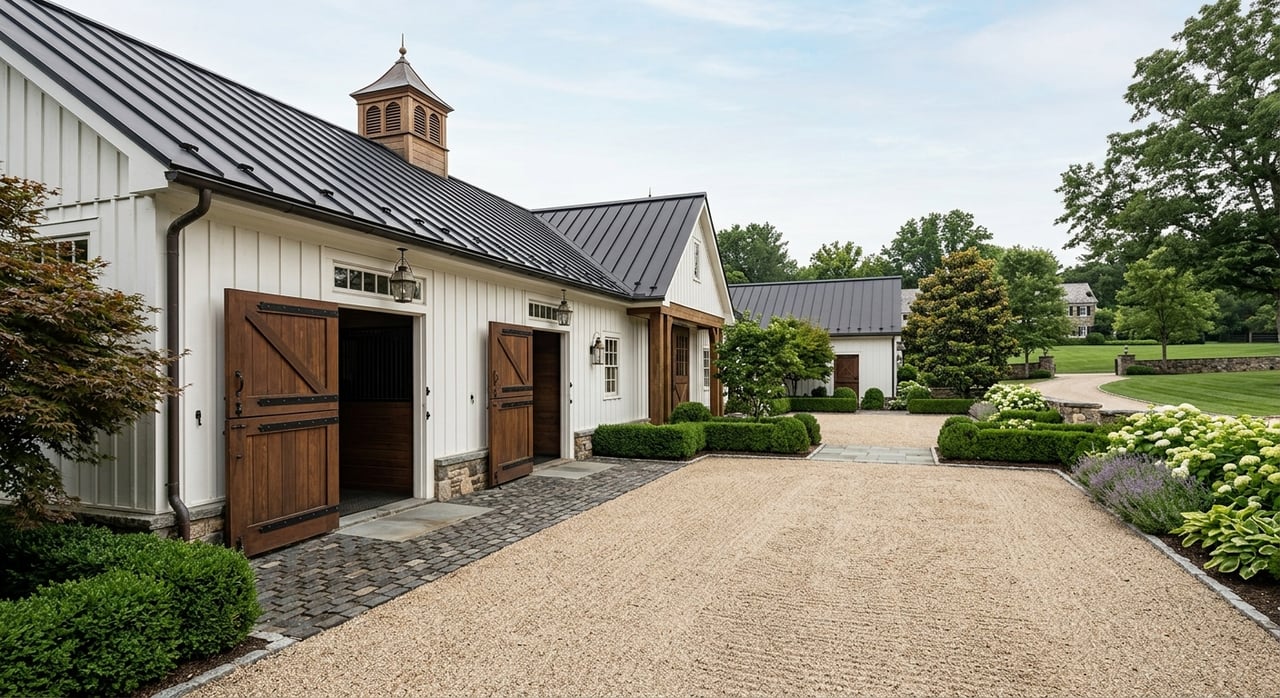
If you love the idea of horses at home, Old Westbury can feel like a rare fit on Long Island. It offers estate-scale land, a long equestrian history, and visible riding infrastructure, but it also asks much more of you than a typical luxury property. Before you buy, it helps to understand how zoning, land use, and day-to-day upkeep shape the experience. Let’s dive in.
Why Old Westbury Stands Out
Old Westbury has deep roots as an estate community. The village traces its history to 1658 and later developed into large self-sufficient estates that included uses such as dairy farms and polo fields. That legacy still shows up today in the land pattern, streetscape, and overall feel of the area.
The village’s 2020 land-use and zoning study paints a clear picture of that setting. About 95% of housing units are single-family detached, with more than 2,050 acres of single-family residential land, 718 acres of estates, and 445 acres of golf and country clubs. Homes are often set back from the road behind mature trees and vegetative buffers, which supports the privacy many equestrian buyers want.
Old Westbury also has real horse-related infrastructure, not just a horse-friendly image. Village materials reference the Old Westbury Equestrian Center, the Meadowbrook Polo Club, and a former horse farm site near Jericho Turnpike and Hitchcock Lane. The village map also shows 17.68 miles of equestrian and walking trails.
What “Right for You” Really Means
An equestrian property in Old Westbury is usually not a simple lifestyle purchase. It is a residence, a land-management project, and a compliance project all at once. If that sounds appealing to you, Old Westbury may be an excellent match.
This type of property tends to work best if you value privacy, acreage, mature landscaping, and a built-in horse culture. It is less ideal if you want a low-maintenance home or if horses will be more of an occasional hobby than a daily responsibility. In Old Westbury, owning horses at home means paying close attention to how the property functions every day.
Horse Keeping Rules in Old Westbury
Residential horse keeping basics
Old Westbury allows horse keeping as an accessory use only in the B, BB, and B-4 Residence Districts. The code limits horse keeping to one horse per 20,000 square feet of lot area, with a maximum of 30 horses. The horses must be owned or leased by the resident occupants, and the number of stalls must be no more than reasonably necessary.
That means the first question is not simply whether a property looks large enough. You need to know the exact zoning district, lot area, and how any existing equestrian improvements fit within the village code. In a market like Old Westbury, that level of detail matters before you commit.
Registration and safety requirements
The village also requires each horse to be registered with the Village Clerk before it is kept on the property. That rule can be easy to overlook, but it is part of legal ownership in the village. Buyers should factor that into their due diligence early.
Buildings used to shelter horses must include smoke and fire detection. They must also have an alarm that is audible inside the home and beyond the building. This reflects how seriously the village treats horse safety and stable operations.
Manure storage rules
Manure handling is not a side issue in Old Westbury. The code requires manure to be stored at least 75 feet from all boundary lines and removed at least weekly from April 1 through October 31. For many buyers, this becomes one of the most important practical tests of whether a property will work well.
Commercial Use Is a Different Category
Some buyers wonder whether they can board, train, or otherwise monetize the property. In Old Westbury, commercial boarding and training of horses is treated very differently from private residential use. It is a special exception in the B, BB, and B-4 districts, not a standard as-of-right use.
The requirements are much stricter. A commercial boarding or training use requires at least 14 contiguous acres, and the code allows 25 horses for the first 14 acres plus one horse for each additional half-acre. The village also imposes specific setbacks, including 200 feet for the stable and manure storage and 150 feet for riding rings or exercise tracks.
Just as important, the code excludes public riding lessons, public rides, horse rentals, and similar activities from the permitted use. So if your vision includes a broader public-facing equestrian business, Old Westbury may not align with that goal.
The Property Has to Function Well
Even a beautiful estate is not automatically a good horse property. In Old Westbury, the best equestrian properties are the ones where the land, structures, drainage, and layout work together. A purchase that looks promising on paper can become difficult if the site does not handle daily operations well.
The village’s estate pattern adds to that calculation. Old Westbury moved from earlier two-acre subdivisions to four-acre residential properties, and the B-4 district requires a four-acre minimum lot area. That does not mean every four-acre parcel is ready for horses, but it does show how lot size and zoning shape the starting point.
Drainage and mud control
Old Westbury’s Horse Owners guidance emphasizes proper grading to avoid mud and runoff issues. It also recommends buffer strips between paddocks or manure storage areas and waterways. If a property holds water, has poorly placed paddocks, or lacks sensible grading, ownership can quickly become more complicated.
Winter conditions matter too. The village guidance recommends winter sacrifice areas to keep horses off wet soils. That is the kind of practical detail that separates a workable equestrian setup from one that creates constant maintenance problems.
Pasture and paddock planning
The village recommends cross-fencing for rotational grazing, along with daily manure collection from stalls and uncovered paddocks. It also encourages sheltered stockpile areas and regular manure removal. These are not cosmetic upgrades. They are part of keeping the property safe, manageable, and neighbor-conscious.
General horse extension guidance supports that approach. It notes that a pasture-based setup typically works best at about one horse per two acres to help maintain pasture quality. That guidance is not a substitute for village code, but it is useful for thinking about how comfortably the land can support your plans.
Fencing matters more than most buyers expect
Fencing can make or break an equestrian property. In Old Westbury, the village’s fence rules prohibit chain-link fences in front yards, prohibit wooden pickets, stockade fences, and vinyl fences, and allow only limited forms of electrified fencing. That matters because a fencing plan has to work for both horse safety and local compliance.
Horse guidance also recommends fencing that is highly visible, free of sharp edges, and practical to maintain over time. Gates should be large enough for equipment and placed where water will not pool. If a property needs major fencing changes, that should be part of your evaluation from the start.
What the Market Suggests
Old Westbury is a high-end, low-inventory market, and that shapes the equestrian search. Realtor.com’s May 2026 overview reports 33 active listings, a median listing price of $3,888,880, and 89 median days on market, while labeling the market a buyer’s market. Redfin’s May 2026 data reports a median sale price of $3,189,091, 12 homes sold in May, and average time on market of about 36 days, while describing the market as somewhat competitive.
Those numbers do not point to a simple conclusion, but they do tell you a few useful things. First, Old Westbury remains an expensive niche market. Second, pricing can vary meaningfully between asking prices and closed sales, which may create negotiation room on some properties.
At the same time, not every estate or horse property should be expected to trade at a major discount. These platforms measure different parts of the market using different methodologies, so the safest takeaway is that careful property-by-property analysis matters more than broad assumptions.
Signs an Old Westbury Equestrian Property Is a Good Fit
You may be a strong fit for this type of purchase if:
- You want estate-scale privacy and mature grounds
- You plan to keep horses as part of daily life, not just occasionally
- You are comfortable managing fencing, manure, drainage, and pasture care
- You value access to a community with a visible equestrian identity
- You understand that zoning and site layout need close review before you buy
Signs It May Not Be the Right Fit
This type of property may be less suitable if:
- You want a lower-maintenance luxury home
- You prefer minimal operational work outside the house itself
- You hope to run public-facing equestrian activities
- You are counting on a small parcel to function like a full horse property
- You want a simple purchase without much regulatory review
A Smart Way to Evaluate a Property
Before you move forward on any Old Westbury equestrian property, it helps to think beyond the house. Focus on whether the full site supports your goals in a practical and compliant way. In this niche, details can have an outsized impact on long-term enjoyment.
A strong review often includes:
- Confirming the zoning district and lot area
- Checking whether horse keeping is accessory use or whether your plans trigger special-exception rules
- Evaluating existing barns, stalls, paddocks, and rings for compliance and function
- Reviewing manure storage locations, drainage patterns, and grading
- Assessing fencing type, visibility, and placement
- Considering how much ongoing land management you truly want to take on
Old Westbury can be a compelling choice if you are looking for a property that supports both luxury living and an equestrian lifestyle. But the right fit comes down to more than curb appeal or acreage on a listing sheet. The best purchase is the one where your goals, the land, and the village rules all line up.
If you are exploring estate or equestrian opportunities on Long Island’s North Shore, working with a local advisor who understands the nuances of luxury properties can make the process much more focused. To start the conversation, connect with Maggie Keats.
FAQs
Can you keep horses on a residential property in Old Westbury?
- Yes. Horse keeping is allowed as an accessory use in the B, BB, and B-4 Residence Districts, subject to lot-size, ownership, stall, manure, and safety rules in the village code.
Can you run a horse boarding or training business in Old Westbury?
- Possibly, but it is not treated the same as private horse keeping. Commercial boarding and training require a special exception, at least 14 contiguous acres, and stricter horse-count and setback rules.
How many horses can a property in Old Westbury have?
- For accessory residential use, the village code allows one horse per 20,000 square feet of lot area, up to a maximum of 30 horses.
What is the hardest part of owning an equestrian property in Old Westbury?
- In practical terms, the recurring challenges are usually manure handling, drainage, mud control, fencing maintenance, pasture rotation, and keeping the site safe and well managed.
Does Old Westbury have trails and a horse culture?
- Yes. Village materials reference equestrian facilities and show 17.68 miles of equestrian and walking trails, which supports Old Westbury’s longstanding horse-friendly identity.