"It's going to look like the grist mill looked in the 1700s."
That's Howard Kroplick, co-president of the Roslyn Landmark Society, describing what's actually happening behind the construction fencing on Old Northern Boulevard right now. If you've walked the Duck Pond loop in Gerry Pond Park this summer, past the gazebo and the picnic tables and the geese that own the place, you've seen the scaffolding. You may not have registered what it means. This is the year the mill stops being a construction site you tune out and starts becoming, for the first time in any living resident's memory, a building that looks like the one John Robeson raised at the head of Hempstead Harbor more than three centuries ago.
That's not a small claim, and it's worth unpacking, because the mill has been "under restoration" for so long that the phrase has lost its urgency for most people who live here. This year it shouldn't.
The Decade That Crawled, the Year That Sprinted
Between 2015 and 2024, the Roslyn Landmark Society raised more than $6.3 million for the mill's restoration, a figure built one grant application, one membership renewal, and one matching gift at a time. That's how historic preservation usually works on Long Island: slow, patient, dependent on the Gerry Charitable Trust here, a New York State Regional Economic Council award there, a $675,000 grant from the state's Environmental Protection Fund program that landed in January 2025.
Then, in September 2025, Nassau County Executive Bruce Blakeman delivered a $1 million installment toward what turned into a $2 million capital plan commitment. On April 24, 2026, he came back and delivered the second $1 million. County Comptroller Elaine Phillips stood with him at the mill site for the presentation. Kroplick's read on what that money actually buys is the line that opened this piece: the finish work that will make the exterior read as it did in the 1700s.
That's the shift. A decade of incremental fundraising just turned into two seven-figure checks inside eight months, and the physical result is visible from the sidewalk. Compare that pace to the forty-two years of delays and planning the mill sat through, closed and county-owned, before the Landmark Society could even begin the restoration. The waiting is over. The carpentry is not.
Older Than the Village Itself
Some context for why anyone bothers. The mill dates to the late 1690s, when John Robeson got permission from the Town of Hempstead to build it at the head of the harbor, an event the Landmark Society's own historians have called the moment that set Roslyn's growth as a commercial village in motion. George Washington ate breakfast with a later owner, Hendrick Onderdonk, on April 24, 1790, a visit Washington recorded in his own diary. The Hicks family ran it as a working mill until 1916, when it was converted into what generations of Roslyn kids remember as the Roslyn Mill Tea House, a spot for tea and cinnamon toast that stayed open until 1974.
It has been closed to the public every year since. Ownership passed to Nassau County, the building sat vacant and deteriorating, and in 1986 it was added to the National Register of Historic Places, a designation that recognized its significance without doing anything to stop the decay. The Landmark Society didn't step in with real momentum until 2015. The building was physically lifted off its original foundation on January 23, 2020, the first time in a century it had moved, and construction paused within weeks when the pandemic shut everything down.
That's the long version of why "it's finally getting its shingles back" is not a small update. It's the first time since your grandparents' generation, if you have grandparents from here, that the building has looked like it's actually recovering rather than merely surviving.
What's Left Before the Shell Is Finished
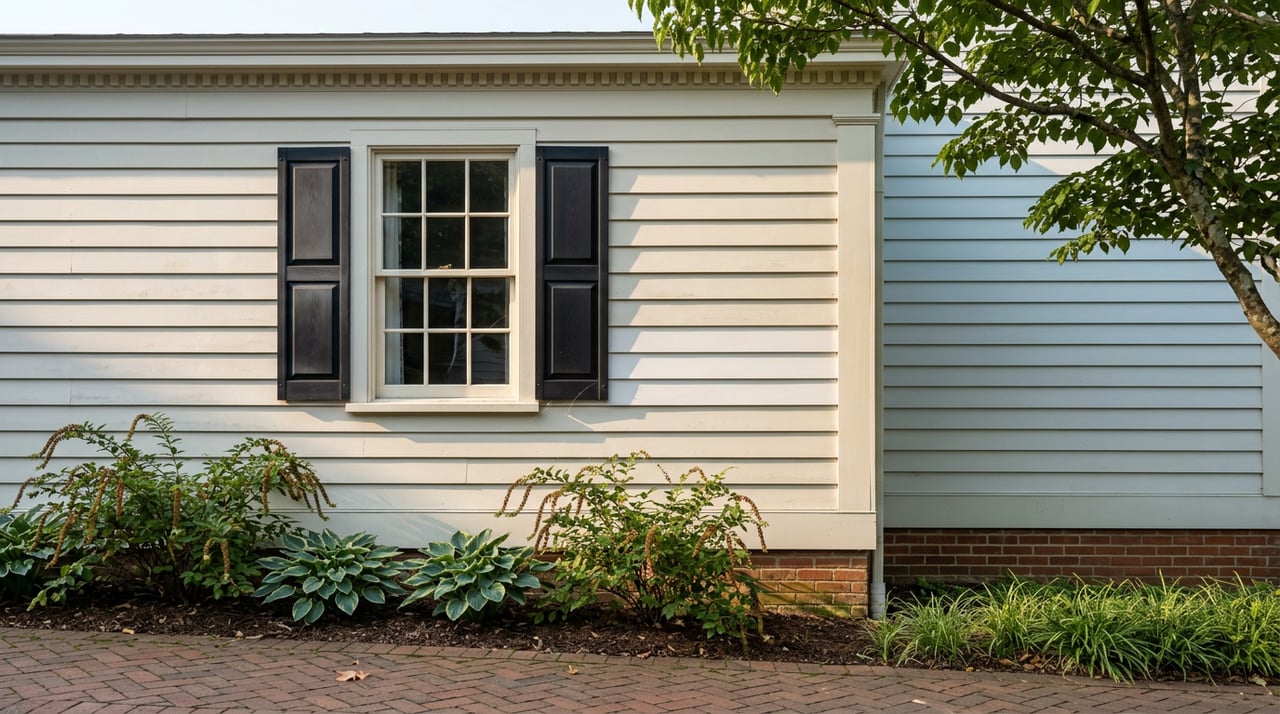
As of the most recent construction update from the Landmark Society, the west side siding is complete, the window framing is finished, and work on the north side siding is well underway. The east side is next. When that's done, Kroplick and project director Jennifer Lister expect to close out what they're calling Phase Two, the exterior work, and move directly into Phase Three: interior flooring, accessibility upgrades, and the systems that will eventually let the county reopen the building to the public.
Back in January, Lister told the Long Island Press her team was working through window and door trim during the winter months specifically so the spring and summer installation could move fast. It has. The siding samples that went up in January are now most of the way around the building. Nobody at the Landmark Society has published a public reopening date, and given that this project has already outlasted four decades of planning and stalled ownership, that caution is earned. But the gap between "someday" and "this fall" has never been this narrow.
The Same Stretch of Road Is Changing Twice
Old Northern Boulevard isn't only rewriting its own history this year. A few doors down from where the mill sits, Griffin Kitchen & Bar opened this spring at 1512 Old Northern Boulevard, on the site of the former Limani Mezze. Chef Pasquale Abbatiello, a Long Island native who spent years running restaurants in Westchester before deciding he wanted to be closer to home after the birth of his twins, built a menu that runs from buttermilk biscuits and mussels a la plancha to braised short ribs and dry-aged steaks, served daily from noon to 10 p.m.
It's a small thing next to a three-centuries-old landmark reassembling its own exterior, but it's the same road, and it says something about the moment Roslyn is in. This isn't a village frozen in amber for the tourists. It's one where the oldest surviving structure and the newest restaurant are both, coincidentally, mid-transformation at the same time, a few hundred feet apart.
How to Actually Watch It Happen
If you want to see the progress rather than just hear about it, the easiest version is a walk you're probably already doing. Gerry Pond Park, the spot most residents just call the Duck Pond, borders the mill directly, along with the Main Street Historic District and the Bryant Library. Grab a pastry first from Diane's Bakery Cafe at 23 Bryant Avenue, or an iced coffee from Delicacies Gourmet Delicatessen at 1354 Old Northern Boulevard, both a short walk from the park, and you've got a reason to loop past the fencing more than once this season.
The Landmark Society also gives you a structured way to go deeper. This year's spring walking tour, led by Village Trustee and architect Craig Westergard, started at the Society's headquarters at 36 Main Street and wound through the Ellen E. Ward Memorial Clock Tower, the Onderdonk property now known as Hendrick's Tavern, and the commercial corridor's 19th and 20th century storefronts. The Society runs these walks most spring and fall seasons, so watch for the next one. And earlier this month, the Society hosted Sunset Dancing on the Dock, an evening event held right in the shadow of the mill, one more sign that this stretch of the village treats its own history as something to gather around rather than just preserve behind glass.
The Society has also just introduced the Roy W. Moger Memorial Greater Roslyn Heritage Trail Network, a new effort to connect the village's historic sites into something more walkable and legible for residents. It's early, but it fits the pattern. Roslyn isn't just restoring buildings one at a time this year. It's trying to make the whole story easier to follow on foot.
That's worth doing. Most restoration news is background noise, the kind of update you skim and forget. This one is different because you can go check it yourself, this week, on a walk you were probably going to take anyway. The mill has spent fifty years as a building people in Roslyn drove past without seeing. This is the year that changes, one finished wall at a time.
If you're already part of this village and want more of what's actually happening here, not the postcard version, Maggie Keats covers the North Shore the way a neighbor would. Let's Connect.