Welcome to
Sands Point
Covering nearly 3000 acres, Sands Point is an entirely residential Village that lies within, and shares resources with, larger neighboring town Port Washington.
2,725 people live in Sands Point, where the median age is 46.2 and the average individual income is $155,020. Data provided by the U.S. Census Bureau.
Total Population
Median Age
Population Density
Average individual Income
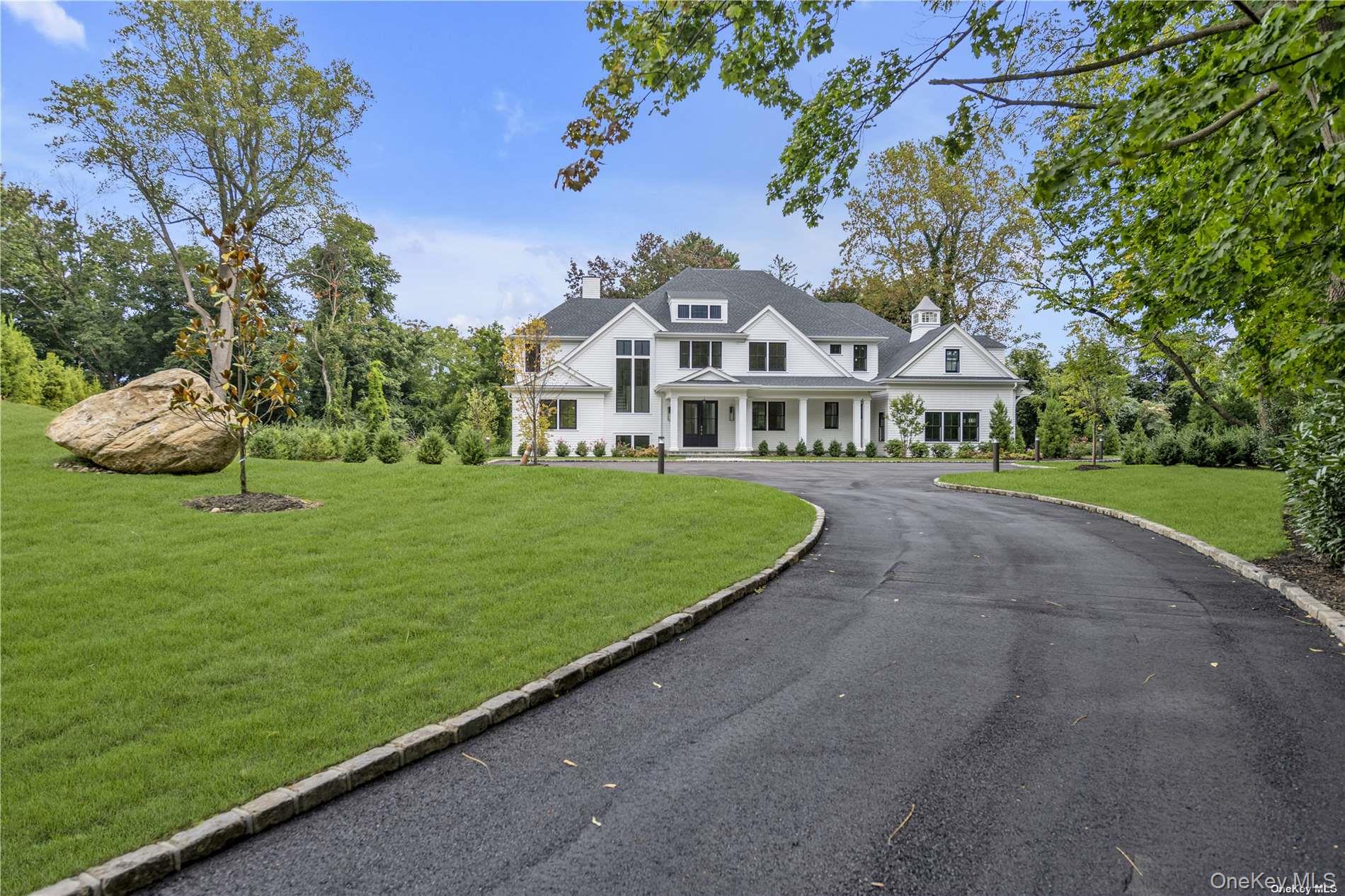
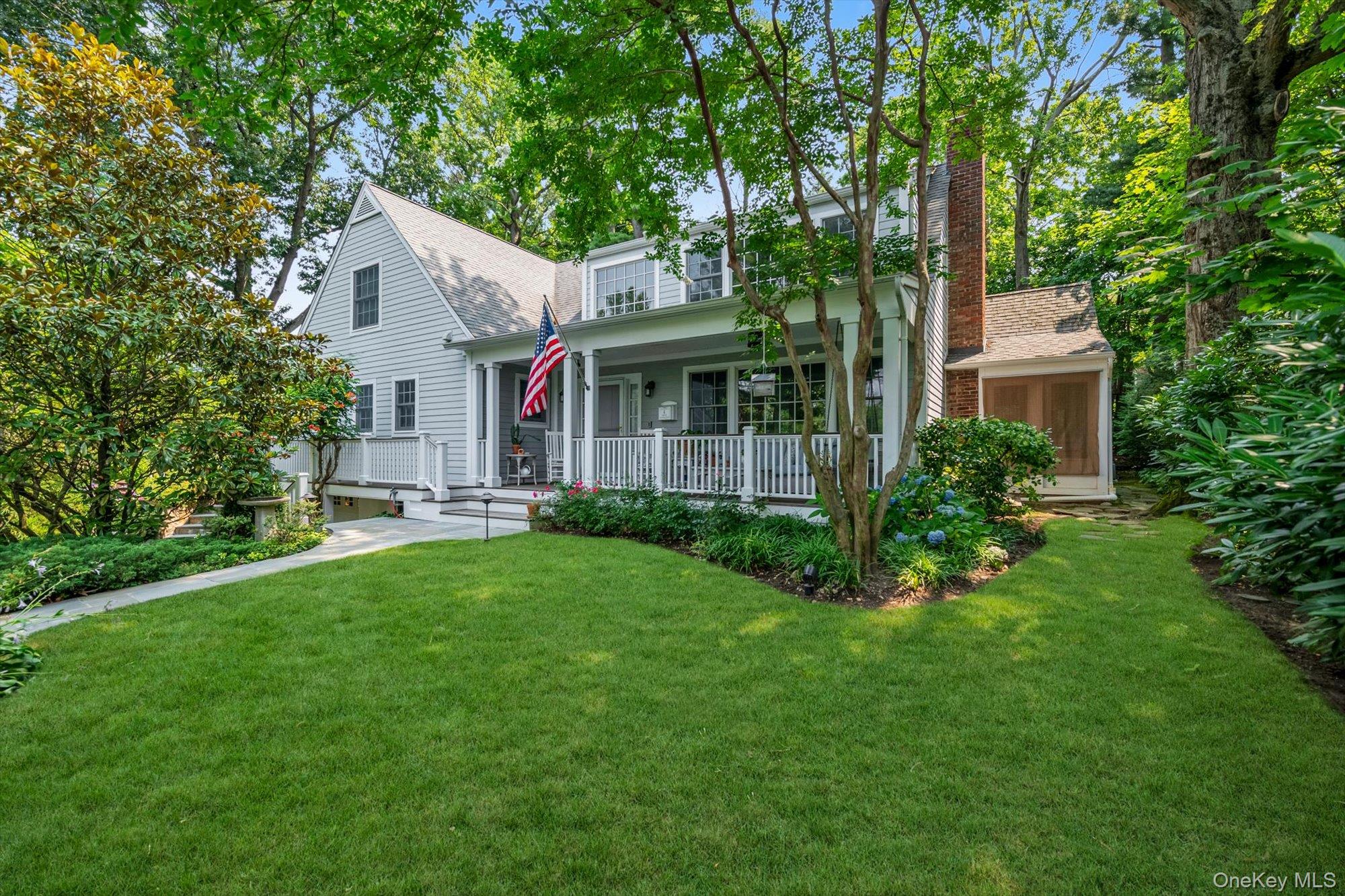
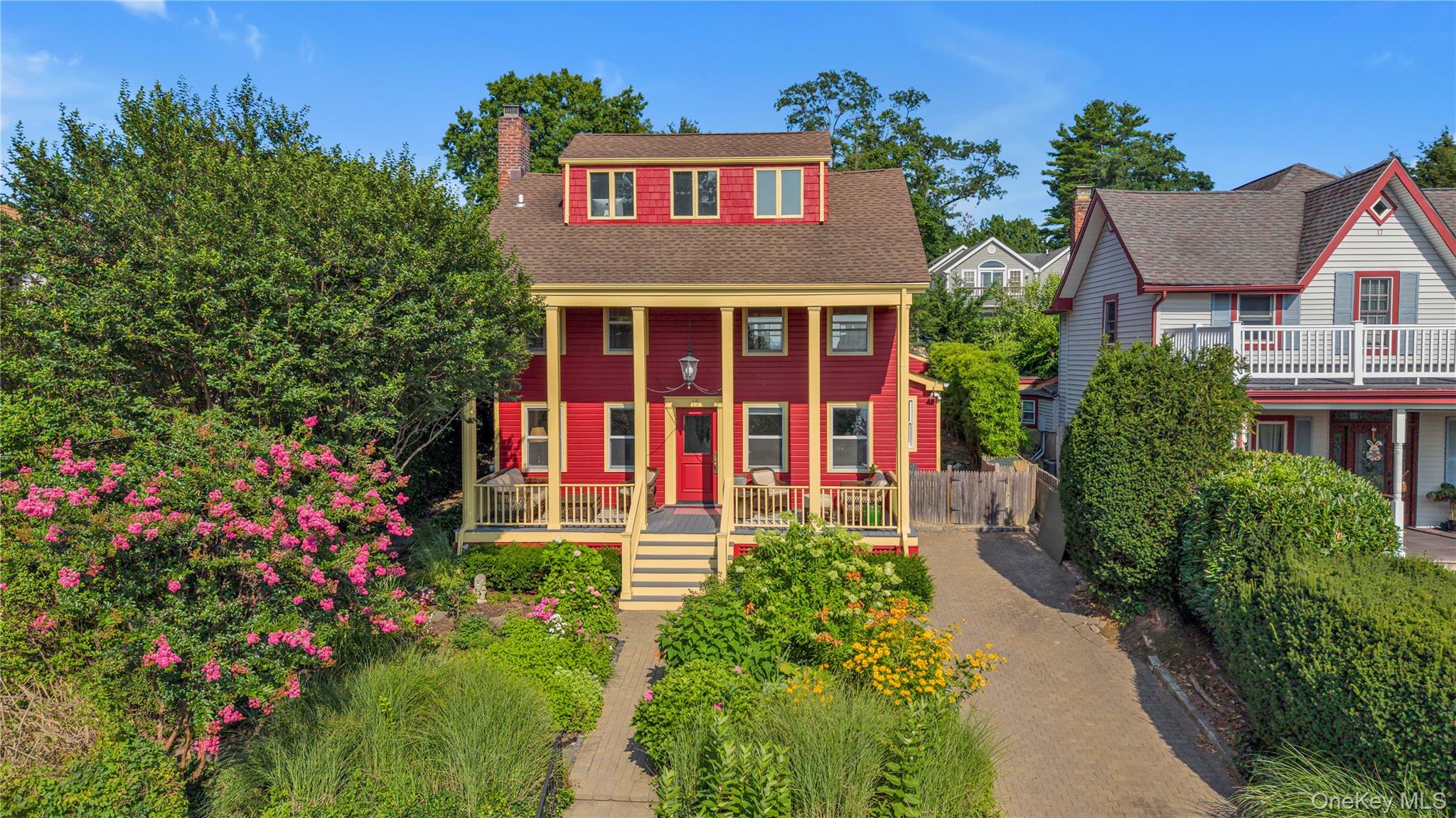
Sands Point is a village of roughly 5.6 square miles at the very tip of Long Island's North Shore, and it is one of the few places in Nassau County where the phrase "estate community" is still literal. Two-acre minimum zoning, no commercial district, and water on three sides have kept the village looking much the way it did when the Guggenheims and Goulds built here — wooded lanes, stone gateposts, and long driveways that disappear before you see the house.
What that means in practice: you get privacy and quiet on a scale that's rare this close to Manhattan, but you drive five to ten minutes south for a gallon of milk. There are no sidewalks lined with cafés, no village center, no grocery store. Residents trade convenience for acreage, and most consider it a bargain.
The buyer profile here is consistent — families moving out of Manhattan or Brooklyn who want land and a strong public school district, and long-tenured North Shore families trading within the peninsula. Inventory is thin, often fewer than a dozen active listings at any given time, which means the market moves on relationships and advance knowledge more than on public listing feeds.
Sands Point occupies the northernmost tip of the Cow Neck Peninsula (also called Manhasset Neck or the Port Washington Peninsula), inside the Town of North Hempstead in Nassau County — about 25 miles from Midtown Manhattan.
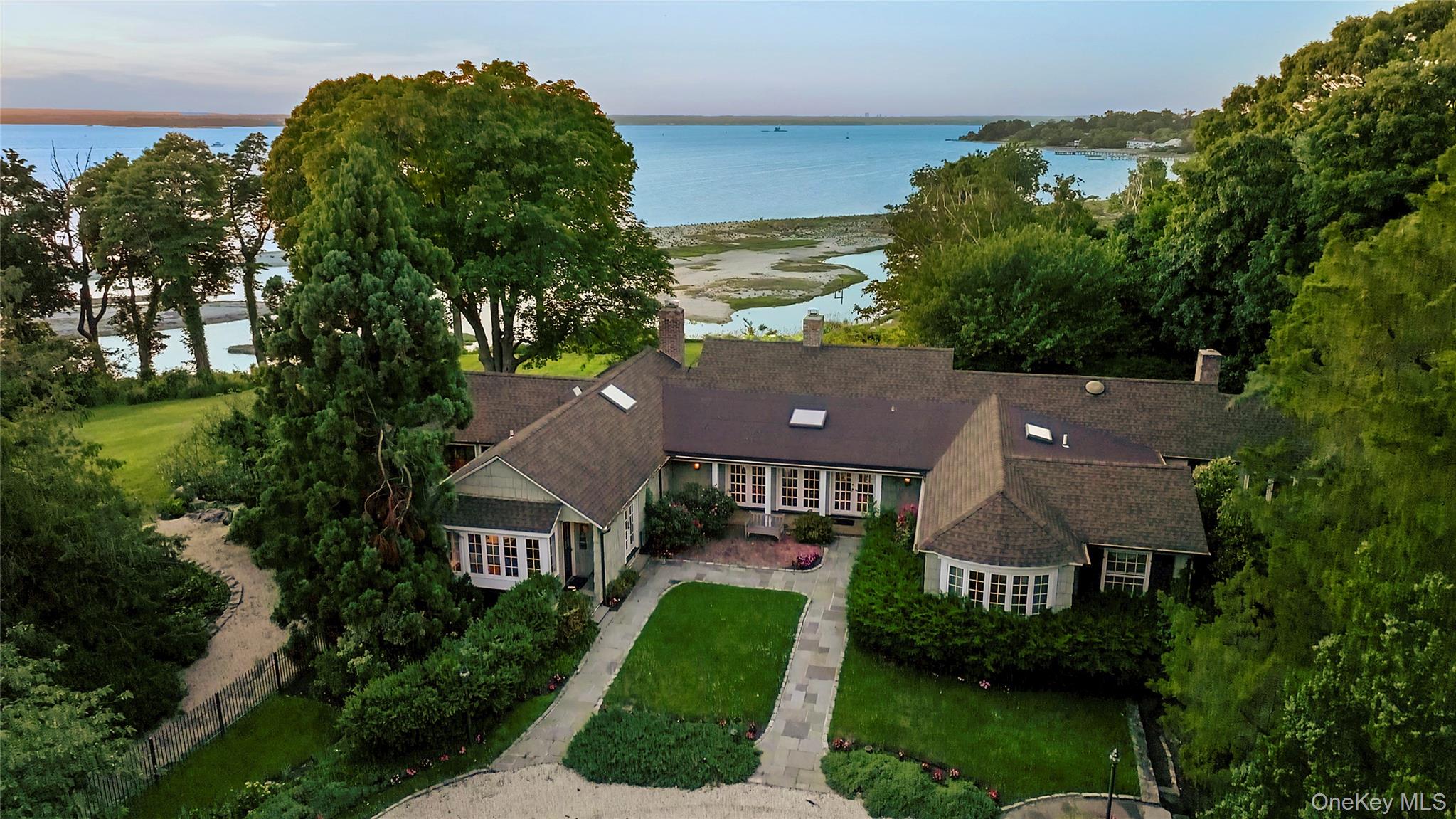
Water surrounds the village on three sides: Long Island Sound to the north, Manhasset Bay to the west, and Hempstead Harbor to the east. The only land border is the southern one, shared with Port Washington North, Manorhaven, and the hamlet of Port Washington.
Locally, the tip has long been called "The Three Points" for its distinct capes — Sands Point to the northwest, Barker's Point to the northeast, Mott's Point along the western shore, with smaller Prospect Point to the north. These names matter when you're house hunting, because they describe genuinely different micro-markets: Barker's Point and Prospect Point carry the deepest water frontage and the highest prices per square foot.
The terrain is a product of the Wisconsin glaciation and the Harbor Hill Moraine — rolling hills, wooded acreage, and steep bluffs above the Sound. Those elevations are why the Gilded Age landed here rather than on flatter ground, and why so many homes still have unobstructed water views a century later.
Sands Point sits at the top end of Long Island residential real estate, with high valuations and deliberately low transaction volume.
Metric | Typical Range |
|---|---|
Median listing price | $3.7M – $4.9M |
Price per square foot | ~$700 – $1,100+ |
Typical lot size | 2 to 5+ acres |
Annual property taxes | $40,000 – $100,000+ |
Inventory | Low; almost entirely single-family estates |
A few things worth understanding before you read too much into those numbers.
Price per square foot is unusually unreliable here. A 5,500-square-foot home on a flat interior acre and a 5,500-square-foot home on a bluff with riparian rights and a deep-water dock can differ by several million dollars. Land, frontage, and dock rights drive value more than interior square footage does.
Taxes vary enormously parcel to parcel. Waterfront acreage carries the highest assessments. Ask for the actual tax bill on any property you're considering, not a neighborhood average.
Low volume cuts both ways. Sellers benefit from scarcity, but a genuinely comparable recent sale can be hard to find, which makes pricing more art than arithmetic. Recent transactions have ranged from the $3M range for well-located interior homes up to $8M+ on Half Moon Lane and Harbor Acres Road, with the village's high-water mark at $11.1M on Middle Neck Road.
Housing stock falls into three broad eras, and knowing which one you're buying into tells you a lot about renovation cost and timeline.
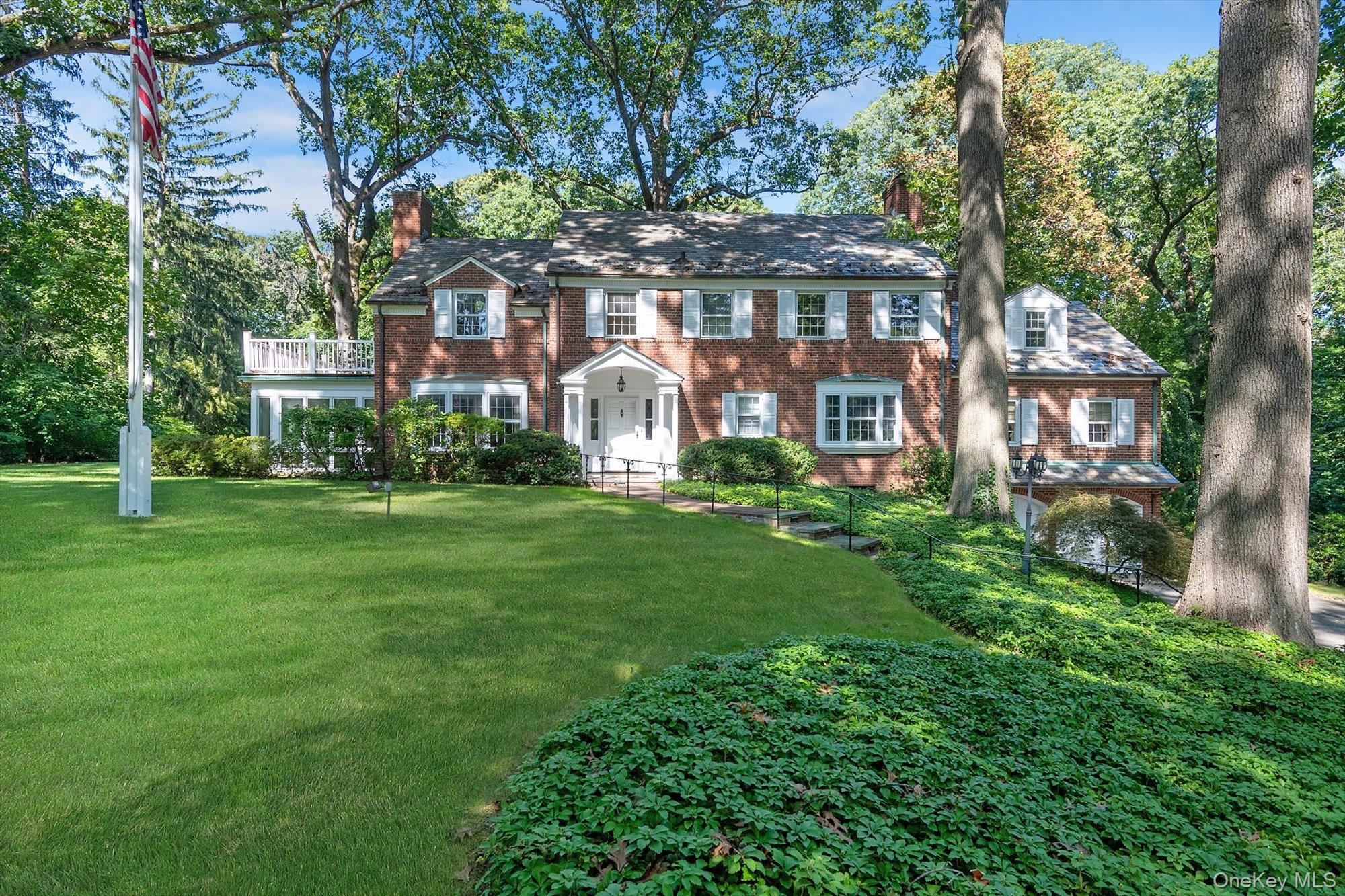
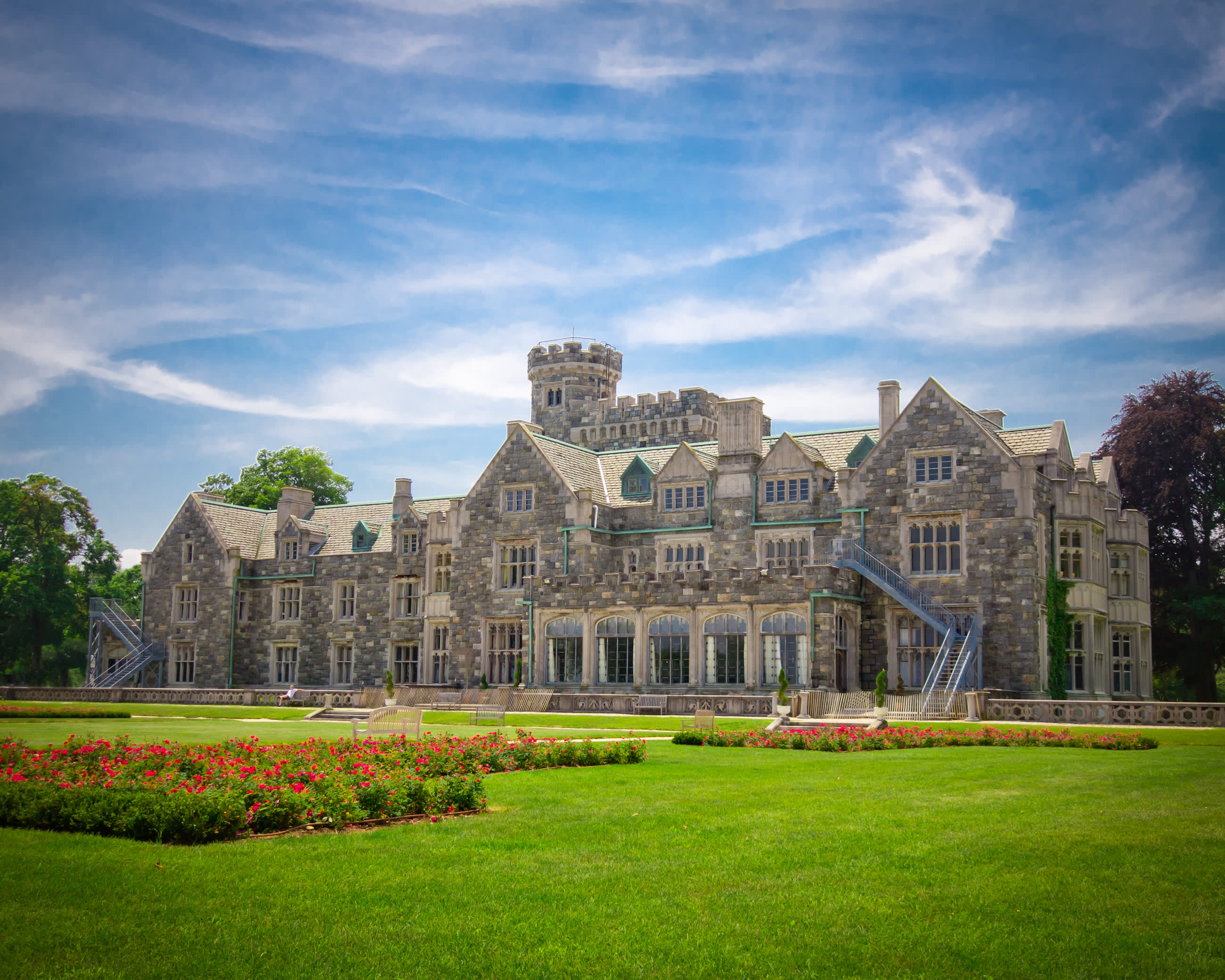
Historic estates and European revival. The village's architectural DNA comes from the 1900s–1920s: Tudor Revival with timber framing and stone facades, French Normandy with steep pitched roofs, and English Jacobean or Georgian Colonial with symmetrical brickwork and formal entries. Hempstead House and Falaise set the template. These homes are extraordinary, and they carry extraordinary maintenance — slate roofs, leaded glass, original plaster, and mechanical systems that were never designed for central air.
Mid-century modern and contemporary. Newer construction and gut renovations favor floor-to-ceiling glass, flat roofs, metal paneling, and open plans oriented entirely toward the Sound. These are the homes that sell fastest to buyers coming out of the city.
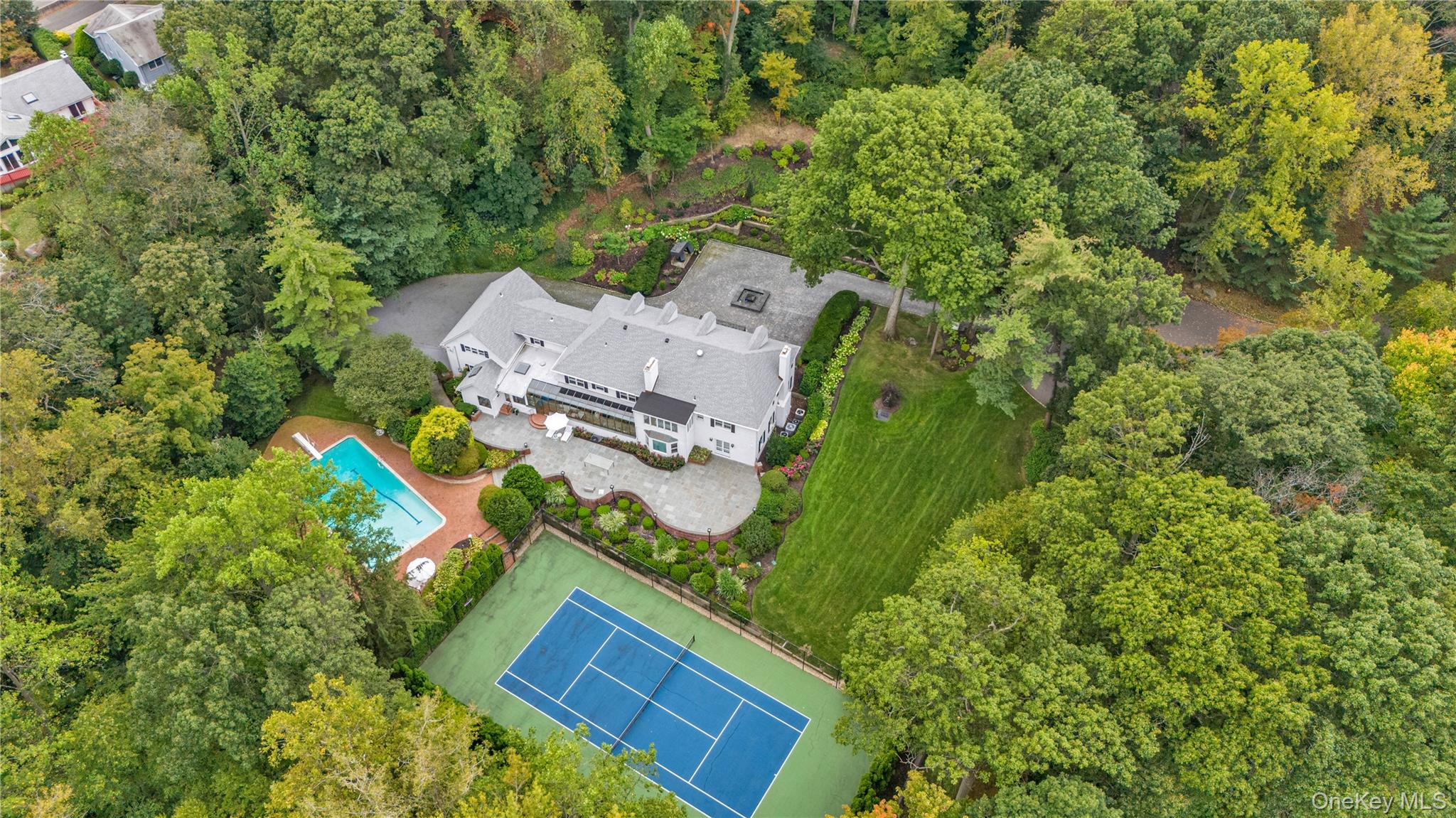
Custom ranch and colonial estates, 1960s–1980s. The largest share of current inventory. Sprawling, well-built, sited on multi-acre lots with tennis courts, pools, and in some cases private docks. They're also where the value opportunities are — many are one renovation away from commanding new-construction pricing, and the two-acre zoning means the land underneath them is effectively irreplaceable.
In the 1920s, Long Island's North Shore became "The Gold Coast" as industrialists, financiers, and heirs built hundreds of country estates. Sands Point was one of its centers.
F. Scott Fitzgerald modeled "East Egg" — the old-money enclave in The Great Gatsby — on Sands Point. He was living across Manhasset Bay in Great Neck, the model for the nouveau riche "West Egg," looking east at the established families on the far shore. The geography of the novel is the geography of this peninsula, almost literally.
Beacon Towers, Alva Belmont's colossal 1917 Gothic estate in Sands Point, is widely cited as a visual source for Gatsby's mansion — European castle architecture dropped onto lavish seaside grounds.
This history isn't just trivia for a listing description. It's the reason the village fought to keep two-acre zoning, the reason the Architectural Review Board exists, and the reason the tree canopy is still intact. Sands Point has spent a century protecting what it inherited.
The 216-acre Sands Point Preserve is the village's cultural anchor and the best public window into the Gold Coast. Three structures dominate it.
Hempstead House — a 40-room, 50,000-square-foot Tudor Revival mansion completed in 1912 for Howard Gould, later owned by Daniel Guggenheim. Limestone walls, a 60-foot vaulted entry hall, and a hand-carved organ, all overlooking the Sound.
Castle Gould — built in 1902 and modeled on Ireland's Kilkenny Castle. It was the estate's carriage house, stable, and staff quarters, which tells you everything about the scale of Gilded Age life here.
Falaise — Harry F. Guggenheim's 1923 French Normandy manor, set on the cliff edge. It remains preserved with original 16th-century European antiques and memorabilia from Guggenheim's support of early aviation, including gifts from Charles Lindbergh.
For residents, the Preserve functions as the village's park — trails, concerts, seasonal events, and bluff walks down to the shoreline. It's a genuine amenity, not just a landmark.
The center of social life is The Village Club of Sands Point, a private club that is municipally owned — an unusual structure that makes membership a real advantage of village residency. It sits on the former Isaac Guggenheim estate above Hempstead Harbor, with the 1918 Italianate mansion serving as the clubhouse.
The club offers an 18-hole championship golf course built into rolling coastal terrain, with sightlines to Hempstead Harbor and, on clear days, the Manhattan skyline. Racquet facilities include 12 outdoor clay tennis courts and 5 platform tennis courts for winter play. There's a multi-pool aquatic complex with dining set against the harbor.
If club life matters to your household, ask about current membership categories and any waitlist early in your search — it can influence which side of the village line you want to buy on.
Sands Point has miles of coastline, but access is deliberately layered — and understanding those layers is essential when comparing properties.
Sands Point Preserve offers public access for an entry or parking fee. Trails descend the bluffs to a rocky Sound shoreline; it's oriented toward walking, birdwatching, and views rather than swimming.
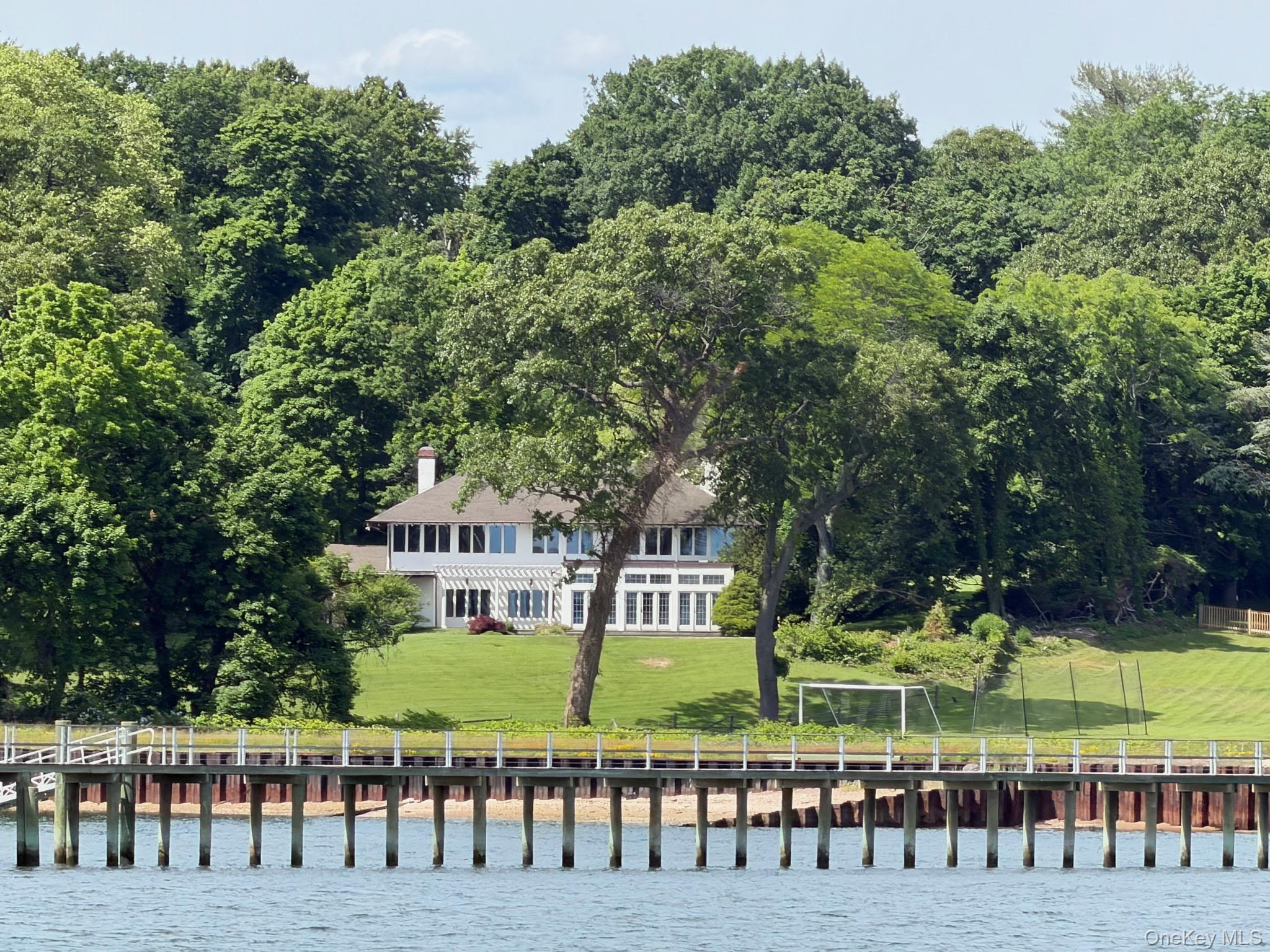
Private estate beaches are the real prize. Dozens of parcels along Prospect Point, Mott's Point, and Barker's Point hold riparian rights with private sand beaches and deep-water docks. These rights are property-specific and materially affect value — never assume waterfront means dockable.
Village resident beach access provides designated municipal areas with beachfront and kayak or paddleboard launching, available by resident permit.
Built in 1809 on the northwestern tip, the Sands Point Lighthouse is the third-oldest standing light station on Long Island. Revolutionary War veteran Noah Mason built the 40-foot octagonal brownstone tower, which guided ships past the reefs at Execution Rocks for over a century.
After federal deactivation in 1922, the parcel passed to suffragist Alva Belmont and later to William Randolph Hearst, who folded the keeper's house into his estate grounds. The village designated it a landmark in 1992.
One important clarification, because buyers ask constantly: the lighthouse is a privately owned residence and is closed to the public on land. The tower is visible mainly from the water. Navigation is now handled by an automated skeletal light offshore.
Sands Point children attend the Port Washington Union Free School District, consistently ranked among the strongest public districts in New York State. For families comparing Sands Point against other Gold Coast villages, the district is often the deciding factor.
Elementary assignment depends on your address within the village — students generally attend Guggenheim Elementary School or Manorhaven Elementary School (K–5). Guggenheim sits right on Sands Point's southern border, on land donated by the Guggenheim family. Because assignment is address-specific, confirm the zone for any home you're serious about rather than relying on the village name.
All students continue to Carrie Palmer Weber Middle School (6–8) and then Paul D. Schreiber High School (9–12), the district's sole high school. Schreiber earns strong state and national rankings for its Advanced Placement offerings, science research program, music and performing arts, and competitive athletics.
Private options are close at hand on the North Shore: The Green Vale School in Old Brookville, Portledge School and Friends Academy in Locust Valley.
The commute is one of Sands Point's most underrated assets, and it comes down to a quirk of LIRR geography.
Port Washington Station is the terminal stop on its branch, about a 5 to 10-minute drive from most Sands Point homes. Morning commuters board an empty train and choose their seat; evening riders can't miss their stop.
The branch bypasses Jamaica entirely. Unlike most LIRR lines, every train runs directly into Manhattan with no transfer — and you can choose Penn Station (Midtown West) or Grand Central Madison (Midtown East).
Express to Manhattan | ~35–42 minutes |
Local | ~48–52 minutes |
Peak frequency | Every 15–30 minutes |
Parking | Permits and daily lots via Town of North Hempstead and Village of Port Washington |
Station parking permits have their own waitlists and residency rules, which is worth sorting out before your first Monday.
Sands Point has no commercial zoning — no grocery stores, no retail, no restaurants inside village borders. That's by design, and it's a large part of why the village feels the way it does. Everything is five to ten minutes south.
Port Washington's Main Street and the Manhasset Bay waterfront handle daily dining. Louie's Prime Steak & Seafood has been on the water since 1905. Nino's Beach covers upscale Mediterranean, P'tite Framboise handles French bistro, and La Piccola Liguria is the long-standing Italian standby.
For groceries, residents use Uncle Giuseppe's Neighborhood Market and Stop & Shop, with Ayhan's Mediterranean Marketplace and Serra Provisions for specialty items. Americana Manhasset — open-air luxury retail including Chanel, Gucci, and Louis Vuitton — is about 15 minutes away.
Medical offices, pharmacies, boutique fitness studios, and the marinas and boat clubs ringing Manhasset Bay all sit just outside the village line.
This is where Sands Point differs most from a conventional suburban purchase, and where deals most often run into trouble. Five things deserve real attention during due diligence.
The two-acre rule. Most of the village is zoned Residence A-1 or Residence A, requiring a minimum of two acres per single-family home. Subdivision into smaller lots is generally prohibited. This protects your investment — but it also means "buy it and split it" is not a strategy here.
Architectural Review Board approval. Exterior work — tear-downs, additions, pool installations, even exterior color changes — goes through the Sands Point Architectural Review Board and Building Department. Build the approval timeline into your renovation plans from the start, not after closing.
No public sewer. Sands Point has no municipal sewer system. Properties run on private septic or cesspools, so a septic inspection is non-negotiable. Water comes from the Village of Sands Point Water Department.
Bluff and coastal regulations. For waterfront homes on the bluffs above the Sound or Manhasset Bay, NYS DEC and village environmental codes govern seawalls, erosion control, docks, and beach stairs. Existing structures may or may not be permitted — verify rather than assume.
Tree preservation. The village regulates tree removal to protect its wooded character. Taking down specimen trees typically requires a permit from the Village Tree Warden.
None of this should discourage a buyer. These rules are precisely why property values here have held so well for so long. They simply require a longer runway and someone who has navigated them before.
Maggie Keats was born and raised in Sands Point, and she has spent her career selling the North Shore — the #1 producer on Long Island, a Pinnacle Award recipient at Douglas Elliman, and a Wall Street Journal/RealTrends "Top 100 Best Real Estate Agents in America" honoree. In a village where inventory is thin and the best properties often trade before they're ever widely marketed, that local depth is the difference between seeing a house and seeing it first. Whether you're evaluating dock rights on Barker's Point, weighing a Gold Coast estate against a renovation candidate on a quieter lane, or preparing your own Sands Point home for sale, Maggie can tell you what the numbers alone won't.
Reach out at (516) 449-7598 or [email protected] — office at 475 Port Washington Blvd., Port Washington, NY 11050.
There's plenty to do around Sands Point, including shopping, dining, nightlife, parks, and more. Data provided by Walk Score and Yelp.
Explore popular things to do in the area, including Sands Point Golf Club.
Sands Point has 837 households, with an average household size of 3.21. Data provided by the U.S. Census Bureau. Here’s what the people living in Sands Point do for work — and how long it takes them to get there. Data provided by the U.S. Census Bureau. 2,725 people call Sands Point home. The population density is 646 and the largest age group is Data provided by the U.S. Census Bureau.
Total Population
Population Density Population Density This is the number of people per square mile in a neighborhood.
Median Age
Men vs Women
Population by Age Group
0-9 Years
10-17 Years
18-24 Years
25-64 Years
65-74 Years
75+ Years
Education Level
Total Households
Average Household Size
Average individual Income
Households with Children
With Children:
Without Children:
Blue vs White Collar Workers
Blue Collar:
White Collar:
475 Port Washington Blvd. Port Washington, NY 11050
475 Port Washington Blvd. Port Washington, NY 11050